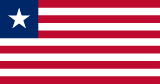
Liberia
Africa · Capital: Monrovia
How it is run: Liberia is a member of the United Nations, so it gets one vote in the General Assembly. Use the research links below to find out exactly who makes the laws there.
Liberia is home to 5.7 million people in Western Africa, where people speak English.
Numbers that tell a story 🔢
👥 People
5.7 million people
That is about 708 people out of every million on Earth (counted in 2025).
🗺️ Land
111,369 km²
Roughly the size of Italy or the state of Arizona.
🏙️ How crowded
About 51 people per square kilometre — a comfortable mix of cities and open land.
📊 Size in its region
37th most people in Africa
40th largest by land in Africa.
🗣️ Official languages
English
💰 Money
Liberian dollar ($)
Life here today 🩺
These come from World Bank open data — the same numbers governments use when they argue about budgets.
❤️ How long people live
62.3 years on average
Doctors, clean water and food supply all change this number over time.
💼 Money made per person each year
about US$915
A lower-income country: money for schools, clinics and roads has to stretch a very long way.
🏢 Living in cities
56.1% of people
Many people still live in villages and farming towns.
🎒 Kids under 15
39.1% of the population
A very young country — schools have to be built quickly.
Everyday details 🧭
📞 Phone code
+231
Dial this before the number to call from another country.
🌐 Websites end in
.lr
🧑 People here are called
Liberian
🏷️ Name at home
Liberia
Also written: Republic of Liberia.
🌊 Coast or inland
Has a coastline
🕊️ UN voting group
African Group
Countries in the same group often plan votes together.
Neighbours & borders 🤝
Liberia touches 3 neighbours by land. Neighbours share rivers, roads and usually a lot of trade.
Say its name around the world 🗣️
Countries have different names in different languages. Try these with a penpal.
Spanish
Liberia
French
Liberia
Arabic
ليبيريا
Chinese
利比里亚
Japanese
リベリア
Russian
Либерия
Portuguese
Libéria
German
Liberia
Put it in perspective 📏
- Nigeria — the most populated country in Africa — has about 41.4× as many people as Liberia.
- Liberia covers roughly 1,061 times the area of Hong Kong Island.
- If everyone in Liberia lined up shoulder to shoulder, the line would stretch about 2,866 km.
Fast facts 🧠
Fact of the day: Liberia is close to the line of 0° longitude, so its clocks are near the world's reference time (UTC).
🏷️ Official name
Republic of Liberia
🏙️ Capital
Monrovia
🌍 Region
Africa · Western Africa
🔤 Country code
LR
🕊️ UN status
UN member state
🚩 Independence
Independent country
More about Liberia 🔎
🧭 Where on the map
6.5° N, 9.5° W
🌐 Half of the world
Northern & Western hemisphere
🕰️ Clock check
Roughly UTC-1 — when it is noon in London it is about 11:00 in Monrovia.
- 🇱🇷 is the flag of Liberia. Its country code — the short name used on the internet and at the Olympics — is LR.
- Liberia is a full member of the United Nations, so it gets one vote in the General Assembly — the same as every other member, big or small.
- Liberia is close to the line of 0° longitude, so its clocks are near the world's reference time (UTC).
- Liberia lies in the tropics, between the Tropic of Cancer and the Tropic of Capricorn, so the sun gets very high overhead.
- Liberia sits in Western Africa, in the northern and western half of the globe.
Countries nearby 🤝
Talk about it 💬
- Liberia has 1 official language. How would your school day change if lessons were taught in more than one language?
- Liberia can trade by sea. What should a country protect first: its ports, its fishing waters, or its beaches?
- If Liberia spoke at the General Assembly tomorrow, what one problem should its delegate ask the world to help fix?
Quick quiz 🧪
Guess first, then tap to check your answer.
What is the capital of Liberia?
Monrovia
Which money do people spend in Liberia?
Liberian dollar ($)
How many countries share a land border with Liberia?
3 — Guinea, Ivory Coast, Sierra Leone.
Roughly how many people live in Liberia?
5.7 million people
Keep researching 🔍
Everything here is a starting point. These trusted sites, databases and libraries will take you further — and they are the kind of sources a teacher will accept in a report.
Start here — kid-friendly encyclopedias 📚
Short articles written for students, with maps and photos you can use in a report.
Official data & government sources 🏛️
Primary sources. Cite these when your teacher asks for real data.
News & current policy 📰
Use two different outlets before you decide what you think.
Your library card 🏫
Libraries give you books, databases and librarians — all free.
Library tip: Ask your school or public librarian for their online databases (like Gale in Context or EBSCO Explora). Your library card unlocks them for free at home, and they are already checked by adults for school use.